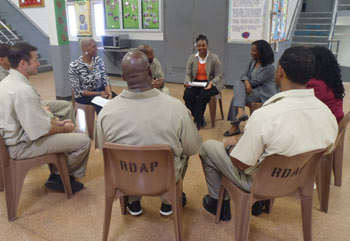
Counselling and forensic psychology: investigating crime and therapy

 Task

Write a report that evaluates the specific challenges and issues that might be faced by prison staff planning to implement a therapeutic service (as described in a hypothetical scenario provided by The Open University, to the Author of this paper). The report should be suitable for reading by a non-academic audience.

Written by Róisín Pitman as the End-of-Module essay (3rd level) for the Psychology portion of the BA (Hons) in Criminology and Psychology (2024).

IMPLEMENTING A THERAPEUTIC SERVICE AT YOUNG OFFENDERS’ INSTITUTE

1. SUMMARY AND RECOMMENDATIONS

The following report will identify, as well as recommend, several psychological interventions that have been addressed within this report (recommendations / observations can be seen in full in Section 6 below), and suitable for the needs of the young men within this institute. The recommendations will include relevant intervention theories, some in group settings and others in one-to-one meetings, and one, where it is hoped that those leaving the institute can continue with if transferred or ultimately within their own community upon release. This report will identify Attachment-Based Theory as a useful tool when first interacting with a client, Cognitive Behavioural Therapy (CBT) which is seen as excellent in group settings and Mindfulness / Dialectical Behavioural Therapy (DBT) for both group and one-to-one sessions when encouraging inmates to self-regulate their behaviour. Finally, Systemic Therapy may useful when back in one’s own community as it draws on other influences within that person’s life.

2. INTRODUCTION

Offering any level of psychological and/or well-being programmes in a forensic setting, whether that be a Youth Offenders Institute (YOI), adult prison or secure psychiatric unit, carries with it a layer of required security and safety, compared with delivery of similar interventions within community-based programmes.

The British Association of Counselling and Psychotherapy’s ethical structure requires its practitioners to maintain a patient’s privacy and confidentiality (Open University 2023, W2; S2.1). This comes with some caveats within a prison structure. In the main body of this report are sections coveringthis as well as identifying several interventions available to you, for individual and/or group dynamics, discussing the benefits and challenges that may arise.

3. THERAPY PROVISION IN FORENSIC SETTINGS

The predominant issue when delivering therapeutic programmes in a forensic setting is security. Inmates are incarcerated to porotect the public from their crimes and to punish them accordingly. Aiding inmates with their mental health and associated issues has, until now, generally been of lower priority than the main reason for their incarceration. Therapists must balance the needs of their patient while being mindful of the overall security of the premises, and manage good risk assessment protocols (Smedley, 2010) cited in Vossler et al. (2017, p.13 & 15). In a community setting, confidentiality is sacrosanct however, dynamics change within a prison system. Any therapists working in a prison setting must be able to discuss concerns about clients with a supervisor and prison authorities, if they believe that what has been disclosed by the client, may lead to issues with their safety and the security of inmates, staff, or the prison itself. In the next section, this report will outline the four main types of therapy intervention commonly used in one-to-one encounters and/or as part of a group structure.

4. THERAPEUTIC APPROACHES

(a) Attachment-Based Theory

This type of therapy was based on a theory by John Bowlby, who concentrated on the type and quality of early relationships, primarily with how our mental and physical health needs are fulfilled within our infancy and early childhood. He claimed that the way we were cared for and nurturedis likely to have a major effect on our adult development (Holmes, 2001) cited in Haley (2017). As the inmates in this YOI are aged between seventeen and twenty-one, there is a chance that many of them will have originated from a lower socioeconomic area, within a one-parent, or socially dysfunctional family unit, or brought up in the care system. One criticism of this theory is that it concentrates primarily on our early childhood without exploring further influences such as peer pressure ((Open University, 2023, W17; S2).

Based on Mary Ainsworth’s ‘Strange Situation Test’ (SST) (1973) cited in Haley (2017), infants were used in a controlled experiment with their primary caregiver and a stranger, to gauge the reactions and interaction of the infant within a series of scenarios. This led to a conclusion of the type of attachment the infant had, i.e., Secure, insecure-ambivalent and insecure-avoidant. Later a fourth was included; disorganised-disorientated. This new category was found to have been identified in children most at risk of abuse or neglect (Main & Soloman, 1986, 1990) cited in Haley (2017).

There is also an adult version, ‘Adult Attachment Interview’ (Hesse, 2008) cited in Haley (2017) with similar categories to the SST. The interview, during counselling, explores relationships with family and other caregivers with the ability to identify a type of attachment in the way the client answers the questions, rather than the actual answers given.

Revisiting childhood experiences often helps the client understand their emotional needs and identify how their current behaviours and emotions are merely linked to repeating their unmet childhood needs (Bowlby, 1988) cited in Haley (2017). The therapist attempts to meet these needs by ‘empathic attunement’, mirroring how a caregiver would meet those of a young child, by taking, what are often bleak and jumbled feelings, and returning them to the client in a more moderated form.

A caution in the delivery of attachment-based therapy is that of ‘transference’ and ‘countertransference’. Transference is when a client recognises feelings expressed about a previous person or situation in their life but attaches them to someone in the present (Grant & Crawley, 2003) cited in Haley (2017). This recognition can be helpful to the client in relation to past and present relationships. However, ‘countertransference’ can emanate from the therapist when they notice a strange feeling themselves, when a client recalls a memory which triggers the therapist personally. This can aid the therapist in feeling empathy with the client and allowing them to be more open (Rowan & Jacobs, 2002) cited in Haley (2017). A further caution would be to be careful that any triggering of oft buried childhood trauma may re-trigger the client, which could lead to an escalation of their mental health problems, which, if they include violence or self-harming, may have to be shared with prison authorities for the safety of the client, other inmates, and staff.

(b) Cognitive Behavioural Therapy (CBT) aka `Cognitive Behavioural Modification’

This is a form of therapy where a client is taught to change their negative, destructive speech and understanding by being offered more positive alternatives. It is helpful in dealing with controlling anger, dealing with stress and anxiety and assists in teaching new coping skills (Colman, 2015, p.142).

In the prison estate, group programmes drawn from CBT dynamics are popular. It is seen as being very influential in helping to reduce reoffending by teaching the inmates new social skills, aiding their ability at problem solving and reasoning and, instead of expressing their frustration through anger and violence, it helps them to develop self-control and makes them feel better about themselves (Landenberger & Lipsey, 2005) cited in Bruce (2017). Another positive regarding CBT in a forensic setting, is that the group therapy teaches inmates to exist more harmoniously with each other and engenders positiveness within that society (Milkman & Wanberg, 2007) cited in Bruce (2017). There are also more CBT based programmes that can be extremely useful, such as “Aggression Replacement Training, Reasoning and Rehabilitation, Enhanced thinking skills, Relapse prevention (for behaviour, drugs and alcohol), Anger management etc.” (Clarke 2010) cited in Bruce (2017).

There are, however, certain challenges with CBT in a forensic setting. While CBT is known to work extremely well in group settings, there is a distinct lack of proof or research that CBT is currently successful when those programmes are used for one-to-one therapy (Bruce, 2017, p.210/11). Those sent to prison, often possess much higher instances of negative physical and mental health conditions than the public. They are more likely to have issues with drugs and alcohol, have a disrupted or absent education, are prone to self-harm and attempted suicide and have lived and suffered within a low socio-economic community (Fazel & Baillargeon, 2011) cited in Bruce (2017). Because of the disruption in, or lack of education, it has been observed that inmates in the United Kingdom often have a reading age of an eleven-year-old child. This is often an obstacle when therapists are requesting the client express their emotions in words (Morrisroe, 2014) cited in Bruce (2017, p.217).

There is a balancing of issues, to be achieved, when providing any sort of therapy in a forensic setting. Whether it is in a one-to-one consultation or a group dynamic, those settings must be viewed as ‘safe spaces’, while in general, prisons are seen as places of punishment and separation from the population. Prisons can be violent, oppressive, and often dehumanising (Peters & Wexler, 2005) cited in Bruce (2017). There is also the difference in a wider power dynamic between therapist and client in a forensic setting than in the community (see Section 5 below).

Warning – There are a multitude of factors that could disrupt CBT, or in fact, any therapy provision at your facility. These include budget restraints, lack of space to deliver these protocols, access to qualified staff, and the fact that an individual prisoner may be unexpectedly transferred to another facility or released into the community, thus ending the therapy prematurely. One idea would be to arrange a continuation of therapy for that inmate whether he is in another facility or back in the community (Bruce, 2017, p.220). This is where a therapy, such as Systemic Therapy, described in the next section, may be a solution.

(c) Systemic Therapy
Providers of ‘Systemic therapy’ promote the view that a person who is suffering from mental illness is not solely responsible for the development of that condition but that it is the result of a combination of relationships, such as personal, family, employment, and wider social interactions (Vossler et al., 2017, p.224). As well as the family unit, systemic therapists now explore all avenues from family to school, peer influence, local community, gang affiliations and drugs and alcohol abuse. In forensic settings, systemic therapy can be more difficult to explore with a client, if the therapist has limited or no ability to reach family members and other community-based evidence affecting the client. However, systemic therapy has been used in some secure settings, and reports show that there have been improvements. While there is limited success in a small number of secure units, mainly adult, where family therapy was offered, a 2014 report showed that sixteen out of forty-nine medium secure units were using systemic therapy as their main offering, showing that 72% of inmates were regularly in family contact (Absalom et al., 2010) cited in Vossler et al. (2017, p.222). There are no studies regarding the offering in YOI’s, however, systemic therapy may be of assistance in the continuation of therapy upon the release of the offender into a community setting, if that were possible.

(d) Mindfulness & Dialectical Behaviour Therapy – (DBT)
Mindfulness has been a major influence within counselling and adapts ancient Buddhist philosophy with westernised psychotherapy (Gilbert, 2010) cited in Barker & Cooper (2017, p.240). Mindfulness can be practised in group therapy or in a one-to-one consultation (Crane, 2009) cited in Barker & Cooper (2017, p.240) and can also be practised away from the therapy room in solitude or in a group. Most mindfulness delivery is manifested in breathing practice and meditation. Mindfulness is believed to aid personal insight, leading a person to new information and new ways to deal with psychological and mental health difficulties (Colman, 2015, p.463). Mindful therapies, which can aid anxiety and depression among inmates, seek to address and confront ‘frightening experiences’ rather than seeking avoidance.

It is known that, in the early 1980s, an incarcerated American prisoner, Fleet Maul, started meditating in a small area of his prison, mainly for his own well-being and ‘something to do’, but it soon spread and in 1989 Maul, while still behind bars, founded the ‘Prison Dharma Institute’. Many argue that mindfulness training reduces the risk of reoffending, reduces substance abuse, all by self-regulation when provided with the skills and tools to do so. It is believed that this type of therapy can improve health, forge greater self-awareness and be able to assist in regulating one’s emotions and build a resilience to stress (Hilert & Haskins, 2022).
One form of mindfulness that has proved successful is Marsha Linehan’s (1993) Dialectical-Behaviour Therapy (DBT) cited in Barker and Cooper (2017). DBT seeks to enquire about the client’s deep seated emotional and developmental background. Linehan observed that CBT tries to alter a client’s thoughts and actions without being acceptive of, or exploring their personal emotions, experiences, and historical self. (Barker and Cooper, 2017, p.246/7).

DBT however, has four areas that are worked on together with the therapist, i.e. Distress tolerance, coping with negative emotions, to build a coping mechanism so that emotional challenges do not escalate to more suffering; Mindfulness, concentrating on the present and not the past and attempt to learn not to allow negative self-judgement; Emotional regulation, recognising when one is having experiences that might overwhelm them and addressing those feelings in a more positive way and Interpersonal effectiveness, by dealing with issues and problems that arise, while protecting existing relationships and retaining respect for oneself and others (Barker & Cooper, 2017, p.247).

DBT is believed to be the only intervention that can successfully treat borderline personality disorder (BPD), although children are not usually diagnosed with such, as they are in transit from child to adult where their personality goes through a major biological and psychological change (Hill, 2001) cited in McDougall and Jones (2007). Rather than BPD, with children and adolescents, it would be more prudent to refer to their changes as personality and interpersonal traits. In McDougall and Jones (2007) they explore DBT within Echo Glen, a young offenders centre in the United States. The primary belief is to lead the inmates to accept their behaviour and not to avoid, deny or resist that it has happened. Many inmates at Echo Glen have a low opinion of themselves and have difficulty making and retaining relationships with others, which often leads to harming themselves or having suicidal ideation. Regardless of whether an inmate is a serious or regular offender, DBT can be used equally well in a one-to-one or group setting, to realign their personal emotions and aid a reduction in aggressive or self-destructive traits.

In England and Wales, the responsibility for the mental health needs of inmates in young offenders institutes come under the Department of Health and the Youth Justice Board and currently, the offering of those services to incarcerated young people is deficient. DBT is known to be successful. (McDougall & Jones, 2007).

5. CHALLENGES OF WORKING IN A FORENSIC SETTING
(a) Power dynamic between therapist & client in a forensic setting
A prison therapist is seen as being part of the prison staff, with the authority that this entails. They are openly seen to have keys that allow access to all areas and have the power to report issues when they arise, which ordinarily might remain confidential (OU, W2, S3). Therapy is often set up through Prison Officers and it is difficult to retain any privacy (Harvey & Smedley, 2020) cited in Vossler et al. (2017, p.20). Sometimes, therapist-inmate relationships can appear intense and, without strong supervision and solid boundaries, could be in danger of crossing well defined protections. It is not uncommon for inmates and therapists to embark upon inappropriate relationships, just as it can be a problem between prison officers and inmates (Vossler et al. 2017, p20). Two examples of this can be found in articles about notorious Liverpool drugs baron, Curtis Warren who had an affair at HMP La Moye, Jersey, with the senior manager of the drug and alcohol counselling service (Gallagher, 2014) and an affair with a female prison officer, more recently, at HMP Whitemoor, UK (Kirkham and Edrich, 2023).

    (b) Age related issues – Gang membership
    Young males are the highest percentage of youth inmates incarcerated in the UK and those between 16 and 24 years of age are also more likely to have personally suffered violence (OU, 2023, W9, S3). The age group catered for in this establishment are extremely vulnerable to being drawn into the criminal world and children from socio-economically deprived areas and broken families are drawn to gangs as a way of finding a ’family’ that will not let them down, as they may feel that they have been by their natal relatives. Gang members may be persistently resistant to any form of therapy as they have formed a solid group identity that boosts their self-esteem and gains them a reputation (OU, W9, S5).

    (c) Staff training
    It is important for correctional staff to understand the young people in their care and, where possible, assist therapists by receiving training in various treatment areas, for example in DBT. This will allow for prison staff to assess problematic behaviour when it presents itself and feel able and confident enough to form an intervention that may assist in resolving an inmate’s behaviour outside of the therapy room. This may also include self-harm and suicidal ideation. It is also imperative that the therapists and staff have a supervisor to filter and share the burden placed on the staff when difficult situations present themselves (McDougall & Jones, 2007).

    6. RECOMMENDATIONS / OBSERVATIONS

    • While Attachment-based Therapy was originally used with infants, there is now an adult version of that scale, the Adult Attachment Interview, which may be useful as an initial exploration of an inmate’s past familial history and may unearth conditions such as child sexual abuse and neglect which could lead to other interventions.
    • Cognitive Behavioural Therapy works well in groups settings, less well in one-to-one encounters. Group settings are popular in helping to reduce reoffending by teaching coping methods, and, as a group, inmates learn to exist in harmony with others.
    • Systemic Therapy relies on involving not just the inmate but also a belief that their family and community environment is a contributing factor to their offending and mental health issues. While it is difficult to involve many different agencies while the client is incarcerated, my recommendation would be that it may be suitable as a continuation of therapy, ideally with the current therapist, when the inmate is released. Continuation of therapy outside the prison would reduce reoffending.
    • Mindfulness is very adaptable and can be practised in group settings, one-to-one’s and inmates can be encouraged to use meditation in their own time, to aid behaviour regulation. DBT aids a person’s ability to build personal resilience, concentrate on the present and eliminate negative self-judgement.
    • Correctional staff, wherever possible, should be encouraged to take courses that will assist in the mental well-being of those they oversee and act as a bridge between therapist and client when the therapist is not available.
    • It is important that whatever therapists you employ, you have a hierarchical support system that they can refer to if needed in times of stress and support, related to the services they provide.

    References
    Barker, M-J. & Cooper, T. (2017) ‘Mindfulness’ in Vossler, A., Havard, C., Pike, G., Barker, M-J. and Raabe, B. (eds), Mad or bad? A critical approach to counselling and forensic psychology, London, Sage Publications Ltd. pp.237-250.

    Bruce, M. (2017) ‘Cognitive behavioural therapy’ in Vossler, A., Havard, C., Pike, G., Barker, M-J. and Raabe, B. (eds), Mad or bad? A critical approach to counselling and forensic psychology, London, Sage Publications Ltd. pp.205-222.

    Colman, A.M. (2015) ‘Cognitive behaviour therapy’, Oxford dictionary of psychology, 4th edition, Oxford, Oxford University Press. p.142.

    Colman, A.M. (2015) ‘Mindfulness’, Oxford dictionary of psychology, 4th edition, Oxford, Oxford University Press. p.463.

    Gallagher, I. (2014) ‘Prison manager two-year affair with Britain’s biggest gangster’ [Online] Mail Online. Available at:
    https://www.dailymail.co.uk/news/article-2560282/Prison-manager-two-year-affair-Britains-biggest-gangster-jail-cell-But-allowed-away-it.html
    (Accessed: 23 May 2024)

    Haley, M. (2017) ‘Attachment based approaches’ in Vossler, A., Havard, C., Pike, G., Barker, M-J. and Raabe, B. (eds), Mad or bad? A critical approach to counselling and forensic psychology, London, Sage Publications Ltd. pp.189-204.

    Hilert, A.J., & Haskins, N. (2022) ‘Teaching mindfulness in prison settings: a grounded theory of strategies to promote engagement and empowerment’ [Online] Journal of Offender Rehabilitation, 10509674, Jan 2022, Vol.61, Issue 1.

    Kirkham, J and Edrich, P (2023).’Inside Curtis Warren’s sordid affair with prison officer which saw her jailed,’ [Online] Liverpool Echo. Available at: https://www.liverpoolecho.co.uk/news/liverpool-news/inside-curtis-warrens-sordid-affair-27270887
    (Accessed 25 May 2024)

    McDougall, T. and Jones, C. (2007) ‘Dialectical behaviour therapy for young offenders: lessons from the USA, Part 2’ [Online] Mental health practice,11(2), pp.20-21. Available at: https://doi.org/10.7748/mhp2007.10.11.2.20.c4324
    (Accessed: 27 May 2024)

    Open University (2023) ‘Confidentiality’, Tensions between therapeutic and forensic settings – Week 2: Section 2.1 [Online] Available at: https://learn2.open.ac.uk/mod/oucontent/view.php?id=2134616&section=2.1
    (Accessed: 27 May 2024)

    Open University (2023) ‘Working in therapeutic and forensic settings – Part 2’,Tensions between therapeutic and forensic settings – Week 2: Section 3 [Online] Available at: https://learn2.open.ac.uk/mod/oucontent/view.php?id=2134616&section=3
    (Accessed: 27 May 2024)

    Open University (2023) ‘Age in the mental health and criminal justice systems’ Age – Week 9: Section 3 [Online] Available at: https://learn2.open.ac.uk/mod/oucontent/view.php?id=2134624&section=3
    (Accessed: 27 May 2024)

    Open University (2023) ‘Teen gangs’ Age – Week 9: Section 5 [Online] Available at: https://learn2.open.ac.uk/mod/oucontent/view.php?id=2134624&section=5
    (Accessed: 27 May 2024)

    Vossler, A., Havard, C., Barker, M-J., Pike, G., Raabe, B and Walkington, Z. (2017) ‘Working therapeutically in forensic settings’ in Vossler, A., Havard, C., Pike, G., Barker, M-J. and Raabe, B. (eds), Mad or bad? A critical approach to counselling and forensic psychology, London, Sage Publications Ltd. pp.9-22.

    Vossler, A., Squire, B. & Bingham, C. (2017) ‘Systemic approaches’ in Vossler, A., Havard, C., Pike, G., Barker, M-J. and Raabe, B. (eds), Mad or bad? A critical approach to counselling and forensic psychology, London, Sage Publications Ltd. pp.223-236.


     

    A critical analysis of the relationship of criminalisation to crime, harm and the state.

    An End-Of-Module assessment / dissertation for Level 3 Criminology BA (Hons) with The Open University. Researched and written during May 2025 by mature student Róisín Pitman.

    Criminalisation is a legislative process within states, where agreed laws define certain behaviours as criminal, and which are subject to various legal remedies. Criminalisation can change within a particular state, historically, culturally and politically (Schur, 1969) cited in Newburn (2017).  Using the subject of drugs, both illicit and legal, this essay proposes to argue that criminalisation cannot be considered a neutral legal process but one created and changed over time, to reflect the political and economic influence of those in power, which the state would argue, is to protect the public and reduce crime.  A state consists of lands within internationally agreed borders, that can share borders with other states. Citizens are offered a certain level of protection within those borders, while laws are created and policed to control their behaviour (Copson, 2020). States can be liberal-democratic, totalitarian, absolute monarchies or constitutionally racist  (Mooney & Tombs, 2020, p.17). Laws enacted by the state are engineered to favour the most powerful and influential, often at the expense of the majority. Not all harms are designated as crimes and one may argue that there are many harms that go un-criminalised (Copson, 2020, p.9). This essay will argue that the criminalisation of drug users through the prohibition model, used globally, is ineffective in reducing drug consumption, costly in relation to criminal justice, diverts finance away from and interferes with, public healthcare and scientific discovery, while disproportionately targeting people from marginalised and socio-economically poor communities. Firstly, this essay will explore the historical roots of the prohibition model that commenced with the inauguration of the US Federal Bureau of Narcotics in 1930; Secondly, the essay looks at countries that retain the death penalty for drug users, dealers and traffickers, and the effects that strict drug enforcement has on marginalised communities that often have little choice but to sell drugs to survive. As well as judicial punishment, some countries, such as The Philippines, have resorted to promoting vigilantism that can be traced to the President of the country. Thirdly this essay explores legal drug production within the global pharmaceutical industry, known as ‘Big Pharma’ and examines Braithwaite’s belief that the description of a global pharmaceutical company matches those of an organised crime group. The state is also shown to be conflicted as they are both supporters of Big Pharma financially, for production and research grants as well as their regulators, creating a conflict of interest and opportunities for illegality. Fourthly, this essay explores the conundrum of legal medical research, using illicit substances, restricted heavily by the continued prohibition model of drug control and inadvertently creating criminals of health trial participants. Fifthly, this essay explores the early stages of decriminalisation and legalisation of certain drugs as some states seek an alternative to drug prohibition, by removing criminalisation and treating drug use as a health issue. Sixthly and seventhly, this essay explores resistance to prohibition and introduction to illicit drug use as a public health and educational issue, with several organisations and former law enforcement, government and health professionals promoting the futility of prohibition and the health and financial benefits of decriminalisation.

    During the 19th century in the former British colony of the United States of America, mood-altering substances such as opiates and cocaine were plentiful in supply and used legally by the public for many reasons, including pharmaceutical use to treat several medical conditions. They were regularly advertised in newspapers and were openly available to purchase, such as heroin cough syrup and cocaine added to drinks to boost mood. In 1915 new laws restricted legal imports of opium and American citizens started to associate drug use such as opium, with Chinese immigrants working on the railways, cocaine was linked to black people and marijuana with Mexicans who were all seen as problematic due to their perceived drug use and people’s connection of drug use with criminality (Musto, 1991). In 1930 the USA formed the Federal Bureau of Narcotics and appointed former alcohol prohibition officer Harry J. Anslinger as its first Commissioner. He was allowed a certain amount of autonomy and oversaw enacting federal drugs laws, resulting in the criminalisation of previously law-abiding citizens. Anslinger was the prime influence in national and international drugs policy which he used to exaggerate the dangers of drugs. This led to Congress enacting even more restrictive drugs legislation and harming American citizens who had now been criminalised as a result. With Anslinger’s connections, he was able to use the discourse of regular media releases to sensationalise the perceived drugs problem and keep the general population and the politicians on his side (Kinder & Walker III, 1986). One of the most disturbing pronouncements made by Anslinger was the harm caused to criminalising drug addicts and arguing that these addicts were the nation’s most serious criminals. He painted frightening images of innocent youth being corrupted by drugs and by the violence that drug use promoted and reduced what used to be seen as a medical issue down to a harmful ‘public menace’ trope. Anslinger regularly used racist language and targeted non-white citizens such as the Mexican’s using marijuana that he referred to as “loco weed”, but that Anslinger claimed made people violent and murderous (Provine, 2011). This scapegoating of minorities has continued to this day with lower socio-economic non-white citizens and immigrants being labelled criminal due to a perceived link to drug use that sees law enforcement disproportionately criminalise and harm those minority populations (Tosh, 2021). Criminalisation of formerly legal drug users, in these circumstances, created by the power of the state and based on the imperialism and puritanism of the early American settlers, continue to cause immeasurable harm to the public. While imprisonment is usually the sentence for those that transgress states’ drug laws, this essay next considers the harms endured by the criminalisation of drug offenders in totalitarian states where the death penalty and extra-judicial ‘justice’ is metered out regularly by and endorsed by the state.

    There are thirty-four countries that retain the death penalty for drug offences including cultivation, manufacturing and trafficking as well as possession, storing, hiding or financing drugs. While the more secretive countries hide their death penalty and execution figures, classified as a state secret, there were 615 reported executions in 2024, from a handful of countries, despite it being contrary to international law. This accounted for forty per cent of all known worldwide executions, with Iran responsible for seventy-nine per cent of all known drug related executions (Girelli et al., 2025, p.9-13). A prohibitive drug policy in these totalitarian countries is a key element of retaining capital punishment, but there would need to be massive political change in these countries to end the death penalty. There were even countries discussing introducing or reintroducing death penalties for drug offences during 2024 including Nigeria, Tonga, Fiji and the Maldives, while in the Philippines there were numerous bills awaiting discussion in their Congress but unlikely to be adopted (Girelli et al., 2025, p.16-17). Research informs us that there is no correlation between the rates of drug use and the restrictive punishments metered out in a prohibitive model of drug enforcement (Home Office, 2014) cited in Zampini and Stengel (2020, p.27). In fact, in the Global Financial Integrity review of 2017, cited in Zampini and Stengel (2020, p.26) the value of the illegal drugs market was between US$426 and US$652 billion per year and likely to rise. One example of a harmful action, caused to the public regarding the prohibition of drugs stance was in the Philippines in 2016, who mirrored the 1980s rhetoric of American First Lady, Nancy Reagan, in her ‘just say no to drugs’ campaign. President Duterte took the ‘war on drugs’ literally, to convince the country that he was a strong leader and declared war on those involved in the drugs trade including an open call for citizens to assault and kill those involved in dealing and using drugs (Zampini and Stengel, 2020, p.28). Lower socio-economic populations, as in countries like The Philippines, live in poverty with no work and little opportunity to improve their lives and, out of necessity, are drawn into the illicit drugs market (Seddon, 2005; Murji, 2007) cited in Zampini and Stengel (2020, p.28). However, Duterte used the vigilantism against those involved in drugs, to mask his political failings in not addressing the severe harms caused to those living below the poverty line with no means to improve their lives (Zampini & Stengel, pp.27-29). So far, this essay has looked at harms to people due to the criminalisation of drugs, however, it may be argued that some far worse drug harms caused to people are currently not considered criminal, such as those caused by ‘Big Pharma’.

    Braithwaite (1984) cited in Tombs (2020, p.97) described the pharmaceutical industry, colloquially named ‘Big Pharma’, as akin to an organised crime group, in that large drug companies were hierarchical in composition, run by faceless people motivated by profit, operating across international borders with sales increasing with customer dependency.  Because drugs, such as for cancer patients in the Global North, are more lucrative to create and sell, drug companies overlook the production of drugs that would wipeout diarrhoea, sleeping sickness tuberculosis and malaria, in many Global South countries; extremely harmful but not criminal (Tombs, 2020, p.86). According to Corporate Watch (2006) cited in Tombs (2020, pp.88-90) there are 14 million preventable deaths from infectious diseases every year, predominantly in the Global South, caused by a lack of health services, poverty and water and sanitation, but the harms caused are emanating from Big Pharma in the Global North. Corporate Watch also identified behaviour from the pharmaceutical companies that further demonstrated the harm that can be caused without it crossing into criminalisation such as deliberately overpricing drugs, immoral ‘direct-to-consumer’ marketing, through mainstream media and social media, influencing Doctors to prescribe particular drugs by paid inducements, and ‘kicking the poor’; using the government to protect that company’s patents and prevent cheaper versions being created (Tombs, 2020, pp.90-92). Braithwaite (1984) cited in Tombs (2020,p.92) stated that Big Pharma were guilty of actual crimes such as bribery, negligent and fraudulent testing, unsafe manufacturing, illegal promotions, and creation of ‘medical colonialism’ by sub-contracting Global South drug testing companies that have weaker regulations and standards (Rawlinson & Yadavendu, 2015) cited in Tombs (2020, p.94). While few individuals have successfully been prosecuted for the harm that these companies create, as it is impossible to identify personal accountability and criminality, Big Pharma are not new to being fined substantial sums. An example of a company being found liable for criminality and causing great harm to its patients was German company Chemie-Grünenthal who produced Thalidomide in the 1950s, marketed as a sleeping pill and morning sickness drug. Test results showed detrimental effects and deformities on the foetus which were covered up, while pressure was applied to approve the drug. Nine company executives were charged but evaded  criminal sanctions with an out-of-court settlement, despite the harm and devastation caused (Ross, 2005) cited in Tombs (2020, p.96). In 2018, Americans spent $535 billion on prescription drugs. The most prescribed drugs were inflated by 40% to 71% from 2011 to 2015 despite companies receiving government grants and tax breaks. Type 1 diabetics were rationing their own supply of insulin, due to the cost, causing complications and some deaths. The company Eli Lilly charged, per vial, $300 to Americans while only double figures in other parts of the world, harmful but not criminal (Meller & Ahmed, 2019).  Next, we discuss mind-altering drugs, weigh up the harms of legal and criminalised substances, and explore the use of psychedelic drugs to aid treatment for mental health issues.

    Many drugs, previously legally available prior to the ‘prohibition model’ of drug control, have had a major effect on the last six decades of medical and therapeutic research. Many drugs, classed as illegal and therefore restricted, are used in medical fields, such as opioids for pain relief, amphetamines for attention-deficit-hyperactivity disorder and cocaine for anaesthesia in ear, nose and throat surgery, but they are strictly controlled (Nutt, 2015, pp.3-4). In 2009, Professor David Nutt, then the UK government’s drugs adviser, declared that alcohol and tobacco were more harmful than many criminalised drugs, such as cannabis, ecstasy and lysergic acid diethylamide (LSD). Nutt clashed with Home Secretary Jacqui Smith when claiming that policy should be based on scientific evidence and not political posturing, which ultimately led to his dismissal (Travis, 2009). Prior to the banning of drugs, like LSD, it was used in trials for alcoholism and ecstasy was used to relieve symptoms of Parkinson’s disease, but because these drugs are in Schedule 1 of the United Nations convention on drugs i.e., having “no medical use in the UK”, it was difficult to get permission to use them. Some synthetic versions were made, with compounds that were considered legal at the time, until the law banned those, and research was abandoned. Big Pharma steered clear of using illegal drugs in drug trials due to the high cost and numerous legal blocks and the fact that company shareholders were uncomfortable being associated with allegations of condoning drug ‘abuse’ (Nutt, 2015, pp.5-6). This year Chapman and Naulls (2025, pp.5-9) wrote a research paper for the UK Government about using psychedelic drugs (such as LSD, Ecstasy and Psilocybin {magic mushrooms}) as part of psychedelic-assisted therapy to attempt to aid post-traumatic stress disorder (PTSD). Because these drugs (other than Ketamine) are in Schedule 1 of the Misuse of Drugs Regulations 2001, they need Home Office licences for research. Some members of parliament have supported the request that some Schedule 1 drugs be downgraded (while remaining Class ‘A’ illicit substances) to relieve restrictions and aid research. In 2023 the Home Affairs committee made a recommendation to reschedule psychedelic drugs to allow for greater freedom to conduct medical trials. When viewing the relationship of criminalisation with crime, harm and the state, there is a glaring issue. While using these drugs in medical trials under strict controls, the drugs are being used legally. However, if these drugs are successful in trials, there is currently no state mechanism that allows continued legal use outside of a trial, thus criminalising patients that need to continue taking them, automatically causing harm and likely regression of their condition. Some states and organisations are challenging the prohibition model and championing ‘resistance’ by seeking medical rather than criminal interventions.

    For decades the United Nations drug conventions held similar views to the prohibitionist stance promoted and exported by Anslinger’s US Federal Bureau of Narcotics. However, the landscape is changing, and some countries are part of the resistance movement by removing the criminalisation of some or all drugs. By 2020, Uruguay, Canada and eleven American states had created new laws to control a legal cannabis market. Even some countries, well known for drug production, Colombia, Argentina and Mexico, now allow personal cannabis use (Aaronson & Shaffer, 2020). Portugal, however, are an example of a complete change of direction from prohibition to decriminalisation of all personal drug taking. In the latter part of the 20th century, Portugal had the highest number of intravenous heroin users in Europe and a high rate of deaths and HIV infections. In 1998 a Portuguese panel of experts in the drugs and treatment field recommended that drug use be seen as more a medical issue than a criminal one, recommending prevention, treatment and rehabilitation instead of criminalisation and incarceration. In 1999 Portugal ended criminal sanctions for drug users while continuing to criminalise drug production and trafficking. Decriminalisation of personal drug use became law in 2001. By removing personal use as a crime, it also reduced the harms from the threat of incarceration, separation from supportive family, and the reduction on risky behaviour that illicit drug use may engender. The Portuguese state posited that by reducing the financial burden of criminalising personal drug users, it would be able to divert those resources to fighting drug trafficking while affording treatment programmes for users, thus reducing the harms caused by a state’s former prohibitive drug policies (Félix & Portugal, 2017). Greenwald (2009) cited in Félix and Portugal (2017, p.123) stated that drug usage and drug deaths decreased greatly as well as the number of persons diagnosed with HIV and AIDS since decriminalisation was introduced, thus further reducing harms.  Portugal’s new decriminalisation model, recommended by the 1998 panel, led to the formation of the National Strategy for the Fight Against Drugs (NSFAD) and Gonçalves et al. (2015) cited in Felix and Portugal (2017, p.123), who studied the social cost to the NSFAD, found that there was a substantial reduction in criminal justice costs associated with criminalising, prosecuting and incarcerating drug users that could be better redirected to treatment and rehabilitation. Becker and Murphy (2013) cited in Félix and Portugal (2017, p123)  claimed that the American-led “war on drugs” should be abandoned and replaced with the Portuguese model to reduce the US prison population. Further resistance to the criminalisation of drug users by other states, and the promotion of harm reduction, instead of harm creation, has seen the emergence of many organisations that promote an alternative to labelling people as criminals in relation to illicit drug use. These include former police officers, policy makers and health professionals such as former UK undercover police drug squad officer Neil Woods and the UK chapter of  the Law Enforcement Action Partnership.

    Many police forces understand that the ‘war on drugs’ will never end unless there are major changes to abolish the prohibition model surrounding drugs. Former police officers are now part of the resistance to the current drug laws. In the UK, Neil Woods (2017) a former undercover drugs police officer is one such person. He stated that with a multi-billion-pound industry like the illicit drug trade, the state has made criminalisation inevitable. While dangerous traffickers, dealers and enforcers are rightly imprisoned, the law surrounding prohibition traps addicts and criminalises them for having a drug habit. With the label of criminal, it is far harder to obtain genuine help from government health services. Woods stated that most of the major drug dealers that he encountered were merely businessmen who decided that the illicit drugs trade was a viable business opportunity, nothing more (Woods, 2017, pp.298-301). Soon after Woods left the police, he sought out an American group, founded in 2002, called Law Enforcement Against Prohibition, and became the UK chapter’s first Chairman, consisting of former officers from all ranks, including Chief Constables, and included health professionals, judges and lawyers. Woods stated that 90% of drug users consume them without wrecking their lives while billions of pounds are spent on the criminalisation, by the state, of drug addicts. Harms are caused to the addict by incarceration when they should be getting medical and social interventions (Woods, 2017, p.303). As LEAP’s profile in the UK increased, they, alongside the Centre for Law Enforcement and Public Health delivered a statement to the UN’s Commission on Narcotic Drugs in 2019, calling for “more humane drug policies” to supersede laws resulting in mass incarceration in places such as the US, and human rights abuses and extra-judicial assaults and killings, such as in Duterte’s Philippines, previously mentioned. The statement mentioned that decriminalisation and legal regulation would vastly diminish the illicit market and reduce harms to health, corruption by police and officials and the economic cost to countries (Cross, 2019). According to the Association of Directors of Public Health website (2025) there were 5,448 drug related deaths, according to the Office of National Statistics, in England and Wales in 2023, 11% up on the previous year while in Scotland, there were 1,172 drug deaths in 2023, up 11.5%. Holland (2020) stated, even before the most recent statistics, that drug related deaths were already the highest on record. Prohibition drug policies are created and driven by the power relationship between politicians and the population they serve. To reclassify drug use from criminal to that of harm reduction, this essay looks at The Loop, a UK based drug harm reduction entity.

    The Loop is a UK based organisation that seeks to reduce the harms caused by drug use through a series of harm reduction programmes including healthcare, interventions, training and workshops which is informed by research with evidence showing that ‘drug checking’ is effective in lowering drug related harms and medical issues. Drug checking in the community can be carried out with the cooperation of law enforcement and signed off by the relevant Chief Constables. In 2016 The Loop carried out its first on-site drug testing facility at an outdoor festival while in 2018, they introduced the UK’s first community-based drug checking service on the streets of Bristol and Durham. In 2024, with a licence issued by the UK Home Office, The Loop engage in regular city centre drug testing in Bristol, where users can take any drug and get it tested, whether they had concerns about its provenance or not. As well as the results, users would be given  a tailored healthcare consultation which was non-judgemental and confidential and aimed at reducing the harms of drug taking. All drugs tested are passed to the police for destruction and nobody using this service is harmed or criminalised by the state. Co-Founder of The Loop is Professor Fiona Measham, Chair in Criminology at the University of Liverpool since 2019, who has spent three decades researching drug use in general as well as in the music festival and night-time economy (The Loop, no date).

    Harm reduction by drug safety testing is not a new phenomenon. Street drugs were tested in the late 1960s and early ‘70s in California, while testing came to Europe in the 1990s at the commencement of ‘acid house’ and the use of the party drug ecstasy. At The Loop’s first festival drug testing in 2016, chemists on-site analysed 247 substances, gave 230 healthcare consultations to 900 attendees which included harm reduction advice. Test results showed that one in five substances were not as described by the seller, one in five used the on-site disposal service for substances of concern. Two thirds of users whose sample was not as described, disposed of other samples. It was also noted that women were identified as taking drugs for the first time and more likely to dispose of them. This pilot showed that festival-goers generally had a positive experience of the drug testing facility (Measham, 2019). The positive understanding between the state and health workers in this endeavour to allow for drug users to openly, and without judgement or criminalisation, get their drugs tested, is a positive example of resistance to the prohibitive drugs legislation that has dominated many countries for over ninety years.   

    In conclusion, the relationship of criminalisation to crime, harm and the state, is shown with the state creating new criminals, by deeming certain actions, previously legal, as a crime, such as drug possession. This further creates harm with higher reported crime rates, increases in the prison population, higher state finances to police the drug laws and subsequent costs of the judicial system. The prohibition model of control, deterrence and incarceration, is harmful. Drug use should be treated as a public health issue and should be regulated by states through decriminalisation and legalisation while law enforcement can direct resources more usefully into targeting organised crime and drug production and trafficking. In fact, figures have shown that the market has increased exponentially and is worth multi-hundreds of billions of dollars annually. Criminalisation has been shown to be ineffective with vast sums being spent by governments attempting to combat it. The prohibition model of drug control, introduced in the United States in 1930 and exported around the globe, instantly criminalised people for previously legal activities. Initial US government prohibition overtly targeted marginalised mostly non-white communities, often from socio-economically poor areas. The new laws were supported by a directed effort through the media, to villainise and persecute non-white citizens, claiming that drugs created violence and murder, and users should be incarcerated. The authorities justified this to protect the public, reduce crime and control the population while reflecting the political views of the period. Even within the thirty-four countries that retain the death penalty for drug offences, there has been a steady increase of those executed or sentenced to death, year on year, so evidently capital punishment does not act as a deterrent either. Those on death row are also predominantly from marginalised communities or those considered expendable and rarely the faceless businesspeople at the top of the drugs chain. There are also faceless people at the top of most Big Pharma companies, the legal drug production industry, but that doesn’t mean that laws aren’t broken and the thin line between legal and illegal is regularly crossed but extremely difficult to police and prosecute. The harms caused by pharmaceutical companies, have regularly been discovered and subject to legal proceedings, accompanied by high figure fines but rarely are the individuals responsible prosecuted despite thousands of people receiving medical injuries. Criminalisation has also been responsible for the difficulties in operating medical drug trials, using illicit substances, as the prohibition model means that a drug that was successful during the trial, would not be legally available outside it, and would criminalise a person under health treatment. In countries such as Portugal, decriminalising all drugs in 2001 has led to better health conditions, less drug deaths and incarcerations, and more money diverted into health resources. Other states now have models of decriminalisation or active drug legalisation, and there are many non-state groups who are emerging from prohibition and declaring resistance and the redirection to a harm reduction and health issue. Many of these resistance groups are formed with former police officers, judges, politicians and health workers at their core, promoting drugs education, safe testing, legalisation, and treatment instead of prosecution and incarceration which stigmatises and criminalises drug addicts, making it harder for them to reintegrate into society. The state creates the problems that they are trying to solve.

    References

    Aaronson, E. & Shaffer, G. (2020) ’Introduction to the symposium on drug decriminalisation, legalisation and international law’, American journal of international law, Vol.114. pp.275-78. Cambridge University Press [Online] Available at: https://www.cambridge.org/core/journals/american-journal-of-international-law/article/introduction-to-the-symposium-on-drug-decriminalization-legalization-and-international-law/60597C454D33CF2741C03B2BD381457C

    (Accessed 20 May 2025)

    Association of Directors of Public Health (2024) ‘Rise in drug related deaths’, Association of Directors of Public Health [Online] Available at: https://www.adph.org.uk/2024/10/rise-in-drug-related-deaths/

    (Accessed 22 May 2025)

    Chapman, J. and Naulls, S. (2025)’Psychedelic-assisted therapy for mental health: Policy considerations’,UK Parliament research briefing, Post brief 64[Online] Available at: http://researchbriefings.files.parliament.uk/documents/POST-PB-0064/POST-PB-0064.pdf

    (Accessed: 22 May 2025)

    Copson, L. (2020) ‘Introduction: What is crime?’, in Copson, L., Dimou, E. and Tombs, S. (eds) Crime, harm and the state, book 1. Milton Keynes: The Open University, pp.1-12.

    Cross, J. (2019) ’British police are raising their voices against the drug war’ UK law enforcement action partnership, LEAP UK [Online] Available at:

    https://ukleap.org/british-police-are-raising-their-voices-against-the-drug-war/  (Accessed: 24 May 2025)

    Félix, S. and Portugal, P. (2017) ‘Drug decriminalization and the price of illicit drugs’, The International journal of drug policy, 39, pp. 121–129. [Online]. Available at: https://doi.org/10.1016/j.drugpo.2016.10.014.

    (Accessed: 20 May 2025)

    Girelli, G., Jofré, M. and Larasati, A. (2025)’The death penalty for drug offences: global overview 2024’ [Online] Harm Reduction International.

    Available at:

    https://hri.global/wp-content/uploads/2025/03/HRI-GlobalOverview-2024-FINAL.pdf  (Accessed: 16 May 2025)

    Holland, A. (2020) ‘An ethical analysis of UK drug policy as an example of a criminal justice approach to drugs: a commentary on the short film Putting UKDrug Policy into Focus.’ Harm Reduction Journal [Online] Vol.17, 97 (2020). https://doi.org/10.1186/s12954-020-00434-8

    Kinder, D.C. and Walker, W.O. (1986) ‘Stable Force in a Storm: Harry J. Anslinger and United States Narcotic Foreign Policy, 1930–1962’, The Journal of American history (Bloomington, Ind.), 72(4), pp. 908–927. Available at: https://doi.org/10.2307/1908896

    (Accessed: 15 May 2025)

    Measham, F. (2019)’Drug safety testing, disposals and dealing in an English field: Exploring the operational and behavioural outcomes of the UK’s first onsite drug checking service, International journal of drug policy, May, 67, pp.102-107. Available at: https://www.sciencedirect.com/science/article/abs/pii/S0955395918302755?via%3Dihub 

    Meller, A. & Ahmed, H. (2019)’How big pharma reap profits while hurting everyday Americans, American progress org [Online] Available at: https://www.americanprogress.org/article/big-pharma-reaps-profits-hurting-everyday-americans/

    (Accessed 20 May 2025)

    Mooney, G. and Tombs, S. (2020)’Understanding states: making law, making order? In Copson, L., Dimou, E. and Tombs, S. (eds) Crime, harm and the state, book 2. Milton Keynes: The Open University. pp.1-30.

    Musto, D.F. (1991) ‘Opium, Cocaine and Marijuana in American History’, Scientific American. United States: Scientific American, Incorporated, pp. 40–47. Available at: https://doi.org/10.1038/scientificamerican0791-40

    (Accessed: 15 May 2025)

    Newburn, T. (2017) ‘Crime as a social construct’, Criminology, Third Edition. Abingdon, Oxon: Routledge. pp.8-9.

    Nutt, D. (2015) ‘Illegal Drugs Laws: Clearing a 50-Year-Old Obstacle to Research’, PLoS biology, 13(1), pp. e1002047–e1002047. [Online] Available at: https://doi.org/10.1371/journal.pbio.1002047.

    (Accessed: 20 May 2025)

    Provine, D.M. (2011) ‘Race and Inequality in the War on Drugs’, Annual review of law and social science, 7(1), pp. 41–60. [Online] Available at: https://doi.org/10.1146/annurev-lawsocsci-102510-105445.

    (Accessed: 15 May 2025)

    The Loop (no date) ‘Our history’ [Online] Available at: https://wearetheloop.org/our-history

    (Accessed 20 May 2025)

    Tombs, S. (2020) ‘Dealing in drugs’, in Copson, L., Dimou, E. and Tombs, S. (eds) Crime, harm and the state, book 1. Milton Keynes: The Open University. pp.77-110.

    Tosh, S. (2021) ‘Drug prohibition and the criminalization of immigrants: The compounding of drug war disparities in the United States deportation regime’, The International journal of drug policy, 87, pp. 102846–102846. Available at: https://doi.org/10.1016/j.drugpo.2020.102846.

    (Accessed: 15 May 2025)

    Travis, A. (2009) ‘Alcohol worse than ecstasy: drugs chief’ The Guardian, [Online]

    Available  at: https://www.theguardian.com/politics/2009/oct/29/nutt-drugs-policy-reform-call (Accessed 20 May 2025)

    Woods, N. (2017) ‘Good cop, bad war, my undercover life inside Britain’s biggest drug gangs: a thousand wasted years’,  Penguin Random House, London, UK. pp.298-312.

    Zampini, G.F., and Stengel, C.M. (2020) ‘The war on drugs: from crime to harm?’

    in Copson, L., Dimou, E. and Tombs, S. (eds) Crime, harm and the state, book 1. Milton Keynes: The Open University. pp.13-46.

    Déjà Vu – My personal Bergerac Legacy – Part 1

    A year before I abandoned my fledgling career in banking (1981) Australian Network 7, in conjunction with the British Broadcasting Company (BBC), brought a character, created by Scotsman Robert Banks Stewart, to life, in the form of a dodgy knee’d recovering alcoholic, Detective Sergeant Jim BERGERAC, of the States of Jersey Police’s Bureau des Étrangers. This department was fictional but in the series, was responsible for dealing with dodgy ‘foreigners’ in the island and those that had moved to live in Jersey from other jurisdictions, primarily due to their wealth and connections, and often underhanded behaviour. The original character of Jim Bergerac was cast, with St. Austell born John Nettles in the signature role. It was believed that rather than John attempt a Jersey accent, which would be strange for the watching public outside of the island to understand, Nettles settled on a soft south-west country mid-range brogue as he was introduced to television audiences regularly on weekend evenings on the BBC.

    (Photograph: BBC / John Nettles AKA Jim Bergerac, in his iconic Triumph Roadster)

    In October 1981, the first series announced itself to its BBC audience and ran for ten episodes charting Detective Sergeant Jim as he negotiated recovery from alcoholism, a prickly ex-wife, Deborah, a raft of miscreants, characters and murderers, a rich and slightly dodgy Yorkshire ex-Father-in-Law, Charlie Hungerford (played by Terry Alexander), and an Inspector, Barney Crozier (Sean Arnold), who was always on Jim’s back for one reason or another. Jersey audiences often, on first showing, considered the plot secondary to many of the Director’s ‘poetic licence’ decisions that may have made for good television, but had local viewers scratching their heads, as they saw cars driving the wrong way along Broad Street, or vehicles entering a town centre Napoleonic fort’s tunnel entrance and emerging on the other side of the island (St. Aubin). However, I am sure that viewers, local to other detective series’s in other locations, must have experienced similar confusion, such as Morse in Oxford, Rebus in Edinburgh and Scott and Bailey in Manchester. It is never quite what it seems in television land.

    Anyway, where do I come in ? During that first autumn showing of Bergerac Series 1, I was becoming disillusioned with the world of finance and realised that being cooped up in an office for the rest of my working life was not where I envisioned myself staying for the next fifty years. I was not a cage animal; I wanted to roam free. Clichéd though it may sound, I wanted to serve my community and what better way than to become a police officer. I started the process to join the States of Jersey Police Force in the June of 1982 and on 1st October of that year, I entered the Rouge Bouillon Police Headquarters, in a shiny new uniform and the service number 30. A week later I was on my way to Ashford Police Training Centre in Kent for my ten week introduction to the world of policing, accompanied by Pc Keith Bray.

    There was no Bergerac series broadcast in 1982, but Jersey officers often got their leg pulled using Bergerac as a means to make fun of us along with the mistaken belief that we had just crawled out of the primordial swamp, with such comments as “Does your police national computer run on gas?”, “Do you have tractors for police cars?” and “It must be quiet if Bergerac solves all your cases.” Actually, in 1982, the States of Jersey Police always did personal background checks through the UK PNC (Police National Computer) and manual card index searches for previous local convictions and Honorary Police Parish Hall enquiries* for local villains. Our own police computer wasn’t set up until the mid 1980’s and we all, as officers, were responsible for populating the system, which started with zero information.

    *Honorary Police Parish Hall EnquiriesThe island of Jersey is a 9 x 5 mile island, twelve miles east of the French Norman coast and 100 miles south of the United Kingdom. In that small area of land we have THIRTEEN POLICE FORCES. The professional Police Force in Jersey, in its present form, is relatively young, created in 1952, and the twelve Parish Police forces have recordings of their activities dating back to the 15th century, based on a Norman French system of Cénteniers (officers in charge of a hundred households) and under them, Vingteniers (each responsible for twenty of those 100 houses). The overall Head of the Honorary Police force, up until recently, was the Connétable of the Parish (similar to the Mayor of a town). Parish Hall Enquiries were a means of dealing with less serious offences by way of a number of remedies, such as a verbal or written warnings, and/or a number of fines for offences that did not warrant a trip to the Magistrate’s Court or, as it was formerly known, the Police Court.

    Having passed out as a qualified police officer at Ashford Police Training Centre on 18th December 1982 (Ashford was covered in snow) , having absorbed weeks of English law, we returned home to a three- week course on Jersey Law.

    The second Bergerac series was due to start filming in 1982 (broadcast in 1983) and I realised that real serving police officers were being used by the BBC crew as both extras and traffic and crowd control during our days off. Before the end of a week’s shift pattern, in the run up to our days off, the Duty Sergeant would have the Bergerac requirements for the next couple of days and volunteers were sought. The days were often long, sometimes boring, and extremely exciting when called upon to act like real police officers on film – HANG ON – we WERE REAL POLICE OFFICERS.

    As Bergerac was coming to an end in the late 80s and finally in 1991 (although most of the ’91 series was set in France), many local police officers were ducking out of Bergerac filming duties, as regular time off to just relax with their families were becoming few and far between. The money was good, but some just wanted a quiet time to themselves, which gave others the chance to rack up more of the BBC licence holders cash. I swear that a large chunk of my house deposit emanated from sharing time with Bergerac, Crozier, Hungerford and the delightful jewel thief Philippa Vale aka Lisa Goddard, who was a reoccurring character. (pictured below: credit – BBC)

    I would like to introduce you to the first couple of little stories that I recall from my time working on the original Bergerac series’. Firstly;

    HOW I NEARLY KILLED AN EXTRA !!!

    (Windward House – St. Brelade’s – former fictional home of Charlie Hungerford – Bergerac – credit: Ian Wylie Photo)

    The above picture was Windward House (no longer standing), one of the fictional houses belonging to Charlie Hungerford, Bergerac’s ex-Father-in-Law. The episode found Charlie discovering a dead body in the lounge of his house, in the early hours of the morning. As the filming was on a hot summer day, the film crew had blacked out all of the house’s windows to simulate night time, however my presence was required to accompany the body, and ambulance men, in daylight, from the house to the back of the ambulance, whereupon I was required to climb in with the ‘body’ and the doors of the vehicle were shut before the scene ended. The first time that we shot the scene, the body bag contained a light weight dummy, which looked a little inauthentic as the ambulance men didn’t appear to be carrying any weight and there was no effort in carrying a hollow dummy, so, the Director decided that the person playing the corpse should also be zipped into the body bag and carried. I wasn’t party to that particular conversation so I am unaware as to how agreeable the ‘corpse’ actually was to the decision to zip him into a strong plastic bag in 28 degree heat. My job had now changed to the uniformed police officer walking alongside the body on a stretcher, climbing into the ambulance with the body, having the doors closed on me and ‘him’ and I then had to quickly unzip the body bag to allow the person to breathe. This scene took ten takes, from various angles, but each time, I unzipped the bag for the corpse. After each take, the person in the bag was sweating more and more profusely as I pulled down the zip. By the end of the tenth take, I was relieved to hear the Director satisfied with the scene and heard, “cut, let’s break there,” which was a relief, as I was dying for a wee and leapt out of the back of the ambulance to find the loo. A few minutes later, I had a thought. Had I or had I not unzipped the body bag before I went to ‘spend a penny?’ Sh*t!!! Don’t think that I did. I ran back to the ambulance, flung open the doors and could see a hand and half an arm sticking out of the bag as the extra was struggling with the zip. I grabbed the zip and pulled it free, much to the relief of a very nearly dead ‘corpse’. Profuse apologies and a few swear words, that I hadn’t heard before, filled the air but, no major harm was done. I wonder now whether certain gyms that promote the use of plastic garments to aid the weight loss of gym users, may have been given the idea from a certain someone in Jersey sweating in the back of an ambulance while filming Bergerac?

    PROTECTING LISA GODDARD FROM THE TABLOID PRESS

    In 1987, I was seconded to the Sub-Police station for nine months, situated at the side of the St. Brelade’s Parish Hall at St. Aubin’s (picture below). We covered just the Parish of St. Brelade and worked two shift times; 10am – 6pm and 6pm – 2am. Day shifts were often single crewed while the nights required pairing with another officer. There was a civilian who manned the telephones during the day and a Duty Sergeant, who, during my secondment, was Sergeant Terry McDonald, a seasoned veteran officer and excellent supervisor.

    (Above – St. Brelade’s Parish Hall in St. Aubin’s)

    On this particular day, we had word that the tabloid press were seeking to confirm an unsubstantiated story about John Nettles and Lisa Goddard, and the usual suspects, The Sun, Mirror, News of the World etc. had sent photographers to try and ‘snap’ John and Lisa ‘together’. John was staying away from his rented home in St. Brelade’s Bay while his house guest, Lisa, was staying during filming. Outside was her less than unobtrusive gold coloured jeep with the personalised number plate ‘LG1’. We had been asked to attend to ‘advise’ the photographers that it would be in their interest to ‘cease and desist’ and get down from the branches of the trees nearby and to stop harassing said occupants of the house. I believe that John had spoken to the Sergeant just prior to our visit.

    Those that remember the times that jewel thief Philippa Vale (Lisa Goddard) appeared in episodes of Bergerac may remember that, as their on screen ‘relationship’ , such as it was, developed into a strange sort of adversarial friendship with deliberate romantic sparks obliquely hinting of a will they-won’t they situation as characters, Philippa’s opening greeting to Bergerac was often, “Hello Sergeant Darling.” Well, I have to admit that when we knocked on the front door and Lisa answered it, and saw the Sergeant stripes on Terry McDonald’s arm, her actual greeting was identical to ‘Philippa’ greeting Bergerac, as she uttered the immortal words, “Hello Sergeant darling”, to which my professional countenance disappeared as I let out an audible guffaw.

    We stayed to reassure her that we would help where we could and the photographers were extracted from the foliage and moved to the roadside and away from danger and from the cottage. Lisa was due to drive to town, late afternoon, to sail on the ferry that evening. Just before we left, our colleague, Duncan Milburn arrived; a seasoned officer, originally from Dumfries, and at times extremely difficult to understand, due to his strong Scottish vocal delivery. The sergeant and I left and accompanied Lisa away from the cottage and the rabid pack of newshounds, while we jokingly left Duncan to give a ‘quote to the press’. Suffice to say, while we made ours and Miss Goddard’s escape, Duncan was spoken to by the photographers, who no doubt couldn’t fathom what the hell he was jabbering on about. The story they were after, didn’t ever make it to press. Lisa Goddard was a charming lady who sounded as posh off screen as her character sounded on it.

    (Credit: The series is produced in collaboration with Banijay UK, BlackLight TV, and Jersey-based Westward Studios, with support from Visit Jersey. Damien Molony is pictured front and centre)

    Thirty-three years after John Nettles stepped away from Bergerac’s iconic red Triumph Roadster, collaboration and a lot of perseverance between Banjay UK, Blacklight TV and Executive Producer of Westward Studios’s, Brian Constantine, resulted in the creation of a modern take on the iconic Bergerac character, with the first six part continual storyline, filmed in the summer of 2024, airing earlier this year with Bergerac’s character played by Irish actor Damien Molony from County Kildare.

    Molony is also known for “roles that include Hal Yorke in BBC Three’s Being Human, DC Albert Flight in the BBC’s Ripper Street, DS Jack Weston in Channel 5’s Suspects, Jon in Channel 4’s GameFace and Dylan in Sky One Original comedy Brassic.” (Wikipedia).

    Other well-known actors who joined Damien in the first of the modern Bergerac series, are Zoë Wanamaker (as a female Charlie Hungerford, still Bergerac’s in-law) and one of the villains of the story, Philip Glenister, as Arthur Wakefield.

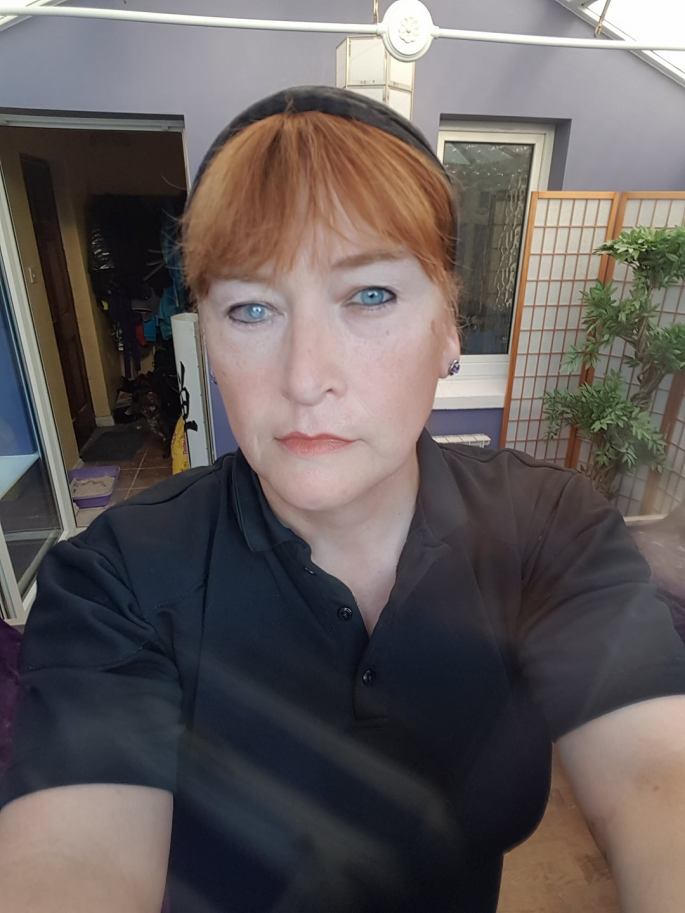
    My involvement in the new Bergerac series is very much behind, and not in front of the screen, employed by a local security company, to provide the cast and crew with security and support wherever needed. It is also a wonderful opportunity for Jersey to be placed front and centre once more with this reimagining of an iconic 80’s show. As a person now in her 60s and not her 20s (as with the original show), I have slowed down a little but am no less enthusiastic about giving my all to the role that I find myself in.

    The Jersey shoots are sets of approximately fifteen continuous and intense days, working long hours, alongside some of the nicest and most dedicated professionals in the industry. There is also an increasing number of local Jersey staff, training and working alongside the Bergerac crews, providing them with hands on experience that will stand them in good stead, should they continue in this industry and I, for one, wish them the very best for the future.

    There are more stories to come from my forty-two year Bergerac connection.

    Degree Success – what now?

    In 2018, I set out to gain a degree with the Open University, at the ripe old age of fifty-six.

    Having left school at sixteen years of age, to enter the world of work, I did not give myself the chance to study and pass ‘A’ levels and then go on to university. To be perfectly honest, at sixteen or even eighteen I didn’t know how my life would pan out or more importantly, what I actually wanted to do as a job. At school, when I was fourteen, we were visited by careers workers who tried to guide us into the future world of work, but at that age all I wanted to do was play sport. In the meantime, at sixteen, most of the ‘clearing’ banks such as Lloyds, National Westminster, Midland and Barclays, were openly seeking sixteen year old school leavers to enter the fascinating and exciting world of banking (sarcasm alert).

    In 1978, as a shiny new sixteen year old, I walked through the imposing wooden doors of Lloyds Bank Broad Street (in St. Helier, Jersey) and started a career in banking. At sixteen the bank were hardly going to make me manager but instead I embarked on a steep learning curve where every male under-manager was always referred to as ‘Sir’ and those lucky women who crashed the glass ceiling and made it to a managerial position were referred to as Miss or Mrs (surname). I was primarily working in the general office dealing with manual filing (oh deep joy) of vouchers, debit and credit slips and returned cheques. When one became more competent and confident, and could be trusted not to swear at a customer, we were actually allowed to interact with the living by way of the Enquiry Desk where we dealt with the good, the bad and the downright ugly face of human customer interaction. Even though an eventual move to Uncharged Securities (stocks and shares) department at Broad Street allowed for a more varied workload, banking wasn’t really for me, and, after an ill-fated transfer to a smaller branch in St. Helier, where I was requested under a false pretence, I looked towards the police force as a career that matched my energy, enthusiasm and the need to get out of an office environment (a separate entry will cover my shortened police career, due to an incurable, but not fatal condition, but one that put pay to my policing ambitions). How has this got anything to do with a DEGREE ?

    WELL, during my approximately eleven years as a States of Jersey Police officer, I arrested many people, wrote reports on their activities, prepared files for Court, prepared case files, if that case was referred to the Royal Court (UK equivalent is Crown Court) and literally moved from one arrest and case to the next one. A criminal’s antecedents, ie. their background, their home life, their parental influence or lack thereof, their hard luck stories, their bluster, their bravado, them being unable to lay straight in bed due to their criminal crookedness, wasn’t really a concern of mine. After all, that was what we had a Probation Service for. All I was interested in was, “Is their enough reasonable suspicion that someone has committed, is committing or is about to commit an offence for which they can be arrested.” If the answer was yes, they were arrested, processed and my reports went up the chain to the duty Sergeant, sometimes the Inspector and on to the Centenier for charging. If the miscreant pled not guilty there was the ‘deep joy’ of a trial and requirement to attend Court to give evidence. If one was required to attend for a sentencing, after background reports had been completed by a Probation Officer, we may then get a chance to hear the story of their background and mitigation as to why they committed the offence in the first place.

    In 2018, a good twenty-five years after medical retirement from the police force (oops sorry, I believe they call it a SERVICE now) I decided that I would seek to find out the reasons why people commit crime, to better understand criminology and the psychology behind offending, to attempt to complete my learning curve of crime, criminal, offence, arrest, punishment, incarceration, rehabilitation (or not, for some who continue to offend).

    I enquired with the local authorities about partial funding should an old person (ME) wish to undertake a degree. I was pleasantly surprised that even mature students are able to obtain financial assistance if one wishes to continue with their learning journey. My late mother Freda always impressed upon me that one should not only try to keep one’s body fit, but also, and more importantly, one’s MIND. I had always been sporty and played league football and hockey up to and including my sixtieth birthday and tried to remain physically fit, despite a condition that affected my joints and eyes. I am still an accomplished international grade Aikido instructor with over forty-five years of training under my belt, thirty-eight years as an instructor who has run courses and taught students in many countries. Our government will cover eighty percent of a university student’s fees if they earn under £50,000 per annum and wish to distance study through seats of learning such as THE OPEN UNIVERSITY (OU), a 50 year+ well established educational facility.

    In October 2018 I commenced my study, at the OU, of a six module, six year Bachelor of Arts Honour’s degree in Criminology and Psychology. After four years I had completed both levels 1 and 2 of the degree before having to take a year away, after major surgery in October 2022. I restarted in October 2023, with my Level 3 in Psychology, followed by my last, and level three Criminology module in October 2024, completing my degree in May 2025. The degree was one of the most intense, rewarding, educational, stressful and euphoric things that I have ever embarked on and completed and I am extremely proud of myself to have made it to the end, and with a successful result; a 2:1 BA (Hons) Crim Psych (Open) at the age of sixty-three.

    I hope to publish a few more of my essays (I have uploaded a couple previously) over the coming months and, although I had to partially shelve my blog while studying, probably disappointing (or not) my two readers, I hope to concentrate of continuing to write on a number of subjects.

    Personal Violence v Structural Violence

    This was part of my End-of-Module assessment during my second level of study with the Open University towards a BA (Hons) in Criminology & Psychology (Róisín Pitman, 2022)

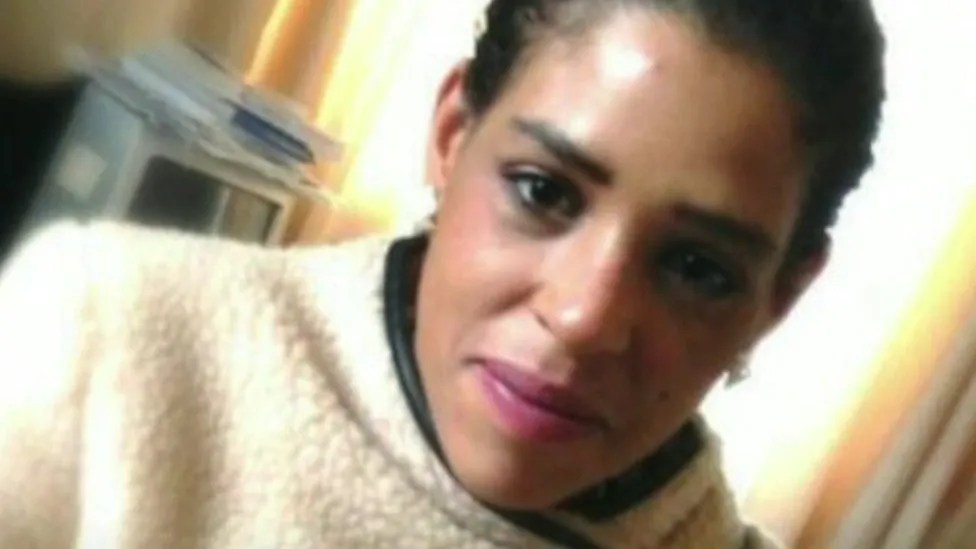
    (picture of Sara Reed, a vulnerable young woman who was needlessly incarcerated – she took her own life in 2016 – https://www.theguardian.com/uk-news/2017/jul/04/sarah-reed-mentally-ill-woman-died-in-cell-after-monitoring-was-reduced-inquest-hears )

    Violence is physical harm inflicted by one individual on another. With reference to at least two blocks from the module, explain how the concept of structural violence takes us beyond this definition.

    My police training in 1982 defined ‘assault’, interpersonal violence, as an attempt threat or offer, by some physical act, to inflict unlawful force upon another, with the apparent ability to carry it out. According to Tombs (2018), ‘structural violence’ takes us from the interpersonal to a phenomenon that affects people directly and indirectly, in mainly socio-economically deprived areas, lacking education and work opportunities and who receive unequal treatment due to their ethnicity, gender, sexual orientation, societal or immigration status. Policies are created by the state which protect the powerful but control, and have power over, those of a lower social standing. Gilligan (1996) cited in Tombs (2018) claimed that there were increased death rates and disability suffered by the lowest classes which led to accepting this as a form of ‘violence.’ To illustrate this, examples will be used with regards to the inequality of the penal system in the cases of Sarah Reed and Lavinia Woodward; the powerlessness of a working-class environment in fighting big business (Sonae factory, Liverpool) and a crossover when personal violence also includes structural violence with regards to rough sleepers.

    The cases of Sarah Reed and Lavinia Woodward appear similar. Both women were facing assault charges, had mental health issues but received very different outcomes due to structural violence. Lavinia Woodward, was a young white Oxford university medical student from an affluent family with homes in the UK and Europe and access to the best lawyers and, due to her drug addiction, access to private rehabilitation facilities. Sarah Reed was a young black woman from a deprived area, with mental health problems, due to the death of a child. While in a state mental health institution, she was sexually assaulted, but it was Sarah who was remanded to prison for defending herself. Placed in solitary confinement, her medication and visits withdrawn, she took her own life after three months (Rowe, 2021). It was Woodward who committed the most serious assault, stabbing a boyfriend. She was allowed bail, to leave the country, breached her bail conditions but was never incarcerated. She admitted the assault but walked away with probation from a sympathetic Judge. (Yorke, 2017).  Sarah received the most horrendous structural violence due to her working-class background, poverty and ethnicity and her unjust incarceration led to her death.

    Another example of structural violence is when a whole community is structurally violated while the government portrayed the decision as being hugely beneficial to a poverty-stricken area. In 1999 the Liverpool ward of Kirkby, one of the poorest in the United Kingdom, were told by politicians that siting a wood particle board manufacturer within the community would boost the economy and create employment. Positioned a hundred metres from habitation, the Sonae factory caused problems from the beginning. Regular complaints  were made in relation to staff safety standards, incidences of fires, dust explosions and lack of monitoring of toxic fumes. The dust emanating from the towers settled on private property over two miles away and appeared to cause numerous health issues among the residents, especially from the carcinogen formaldehyde. The company received many prohibition notices and fines and despite three employees dying in two different incidents the authorities were reticent about finding blame. Due to Kirkby’s socially deprived area it was easier for the authorities to avoid objections before and during Sonae’s existence which ended in 2012 (Copson & Tombs, 2018).

    Structural violence allows us to explore the state and their policies and laws that seek to control our lives rather than individual violence against the person. One area where there is crossover between individual violence and structural violence is when dealing with ‘rough sleepers. Due to the current economic hardships felt in society, there is an explosion of people who find themselves sleeping rough in public. Cooper (2016) cited in Tombs (2018) highlights the physical violence regularly suffered by rough sleepers including physical and sexual assault, verbal abuse and theft of what little they have or having their meagre belongings damaged. However, they also must contend with structural violence administered by the state such as the offence of vagrancy, taking discarded food from supermarket waste and fines for receiving money through begging; fines they can invariably not afford and therefore are entered into the prison system purely for being without home or habitation. (Cooper and Mc Culloch, 2017) cited in Tombs (2018). Many of these people have mental health issues that are compounded by incarceration.

    In conclusion, the concept of structural violence takes us beyond the general understanding of violence; a physical assault by one or more persons on another. Structural violence can affect anyone, even if they are unaware that they are a victim. It can affect the more socio-economically deprived communities, other ethnicities, gender, members of the lesbian, gay, bisexual and trans community (LGBTQ+), the disabled, homeless, mentally ill and immigrants who often feel abandoned by the state and treated less well than the more dominant and affluent demographics.

    Structural violence against ethnic minorities was illustrated with the ill-treatment of Sarah Reed in Holloway prison while a rich white student effectively suffered few consequences for her violent actions. Sonae factory and its practices, in Kirkby, committed structural violence, not only on its employees but a whole community and finally one saw the crossover, from interpersonal violence, committed against the homeless by other humans, to the structural violence metered out by the state, by legal sanctions, against a vulnerable group of people.

    References

    Copson, L. and Tombs, S. (2021) ‘Exploring harms of the powerful’ [Video] DD212 Criminological theories and concepts. Week 24; Section 2. Available at

    (Accessed 5 June 2022)

    Rowe, A. (2021), ‘Self-inflicted deaths in prison’[Video] DD212 Criminological theories and concepts.  Week 3; Section 2. Available at

    (Accessed 5 June 2022)

    Tombs, S. (2018), ‘Structural violence’ in Cooper, V. and Phoenix, J. (eds) Criminological theories and concepts 2, Milton Keynes, The Open University, pp.243-271.

    Yorke, H. (2017), ‘Lavinia Woodward: Oxford student ‘too bright’ for prison is spared jail for stabbing boyfriend’ [Online] The Telegraph. Telegraph Media Group.

    Available at https://advance-lexis-com.libezproxy.open.ac.uk/document/index?crid=6e4ab3b4-ba42-4b70-be4d-989c81a29c02&pdpermalink=5a5e474a-18db-4ee7-98c3-d0f0910a01e0&pdmfid=1519360&pdisurlapi=true

    (Accessed 5 June 2022)

    RESPECT IS A TWO-WAY STREET

    Respect is a Two Way Street

    First published 3, December 2013 on Musings of an AikiBean Blogsport

    There have been many instances where you hear on the news that someone has been assaulted on the street for not showing enough ‘respect’ to the assailant. Ah, this old fashioned word being used by some of the street dwellers because they believe that their mere presence on a street in their neighbourhood means that anyone passing through has to show a degree of deference to them for no other reason that they ‘demand’ it, neigh, expect it.

    When I was growing up we learned respect from an early age; respect for one’s elders, respect for your teachers, respect for the police. This magical word ‘respect’ was used to show due deference to people with life experience, local standing or positions of authority. I was taught to give up my seat on a bus for an adult, not just an elderly or disabled passenger but any adult. All teachers at school were Sir or Miss, never John or Sarah. In many cases this tradition continued many years after leaving one’s alma mater. We didn’t question this life lesson given at the knee of our parents, it was just the way it was.

    I have run a martial arts club since 1987 when I was a 1st Kyu. The reasoning behind this was that, as we had no black belt to take instruction from within the island, I would travel to the home of my English mentor on a regular basis and would be encouraged to begin teaching aikido classes to those that were happy to take instruction from a non-black belt. I didn’t even think about whether the students who trained with me in the early days respected me. I suppose in some way they must have, given that they kept coming back for more classes, but the idea that they somehow respected me, didn’t enter into my thoughts. I did however respect them greatly for giving me the chance to share my interpretation of aikido. Indeed I respect any person who walks through the dojo door to undertake instruction and the sharing of aikido practise with me. I am merely a student like them but one who is a little further along the path. After all, the word sensei means “person born before another” or “one who comes before”, which implies one who teaches based on wisdom gained from age and experience.

    I have never asked for or expected any student in my dojo to call me ‘sensei’ or ‘kanchō’. My name is Roisin or Rosh. However, many students do refer to me by that title although I have never insisted upon it. They may have been schooled by other senior students to refer to me in that manner but it has never been a dojo ‘rule’. I leave it up to them.

    When visiting instructors are on the tatame in my dojo I will personally always refer to them as ‘sensei’ whether they be senior or junior to me in grade as I think it is the right way to address them in front of my students. Respect is earned and should never be demanded.

    There have been dojos that I have visited, not just aikido ones, where they appear to be trying to mimic the atmosphere of their interpretation of an austere style Japanese dojo in the way that everyone behaves and conducts their business. No talking, no explanations, often taking their interpretation of such a ‘dojo’ and ratcheting it up a notch or two. Some have even been known to change their names by deed poll to that of a Japanese family name just, in their eyes, to add to the authenticity. This is obviously in the minority but it does happen.

    I have witnessed, in the past, a group of visiting martial arts (not Aikido) teachers in the bar of a local hotel deep in conversation when a new and enthusiastic student inadvertently entered their clique and proceeded to join in the conversation. Presumptuous; possibly, rude; probably, but if my opinion maybe he should have been quietly taken to one side by a senior student and reminded of what social etiquette dictates in those circumstances. Instead, the senior guy at the bar shouted at this poor unfortunate newbie in front of dozens of other people and commanded him to drop to the floor and ‘give me 20’ (ie twenty press ups, in a licensed bar, while wearing his best suit). The new student visibly reddened and quickly dropped to the floor where his utter humiliation was complete. This is not showing respect to your student. This was bullying and has no place in a dojo or in any social situation.

    As a ‘sensei’, a person, a person perceived as possessing more life experience and wisdom that those that follow, you have a tremendous influence upon some peoples’ lives so be sure that you never abuse that privilege.

    And remember, Respect is a Two Way Street. 

    The Dojo is not the street

    (This article was originally written on 11 January 2012 and appeared on ‘Musings of an AikiBean’ blog by Róisín Pitman)

    A dojo is, to all intents and purposes a classroom, a place of enlightenment, somewhere to study your martial art, practise movement and technique and share your experience with others. However, the dojo is not the street.

    No matter how many martial arts classes claim to teach ‘street self defence’ in essence you are usually getting a watered down version of the martial art offered by that particular school and paired with the instructors own belief on what is required outside the dojo in a ‘real life’ situation. There are many martial arts instructors throughout the world, who are highly skilled and proficient in their chosen art, who have never experienced the ‘fear’ and ‘danger’ of a REAL life violent altercation.

    It amuses me somewhat, when visiting certain martial arts forums on the world wide web, when you read posts claiming that this martial art is ‘the best’ for combat and that martial art is no good because it is not ‘real’. You get phrases like ‘No holds barred’ and ‘no rules’ martial arts. If there is a combat area, ring or cage with a referee, then it is not, nor ever will be ‘no holds barred’. Even for this type of popular sport as in all MMA (mixed martial arts) contests there are rules that both fighters have to abide by. Often an opponent ‘taps out’ meaning that when a lock, choke or technique becomes unbearable they ‘tap’ to indicate to their opponent and the referee that they can no longer continue. The referee then stops the fight. Therefore, these types of contests are controlled by a third person ie the referee and are not a ‘no holds barred’ contest. If you take a ‘no holds barred’ contest literally, it will mean that the protagonists fight on until one is either incapacitated or killed; no holds barred means no rules. This would never happen in any organised sporting arena, especially in this litigation crazy health and safety era.

    There are many martial arts that are competitive and therefore, during sparring or competition, the element of adrenaline is introduced to the equation. Being able to control the adrenaline flow during competition is paramount if you are to perform to your maximum potential. However, the adrenaline flow that pumps during a real altercation is what I would refer to as the ‘Fear Factor’. It is a natural reaction that heightens the senses and prepares the physical body for a ‘fight’ or ‘flight’ scenario. If you can control it then you will have more chance to react naturally and instinctively to such a situation. If that reaction is that you run away in the face of a potentially violent altercation then you have succeeded in avoiding confrontation. If you panic and start hyperventilating you may not be able to function in a normal physical or mental way. None of this can be re-created in the dojo, as it is impossible to introduce the element of reality. The dojo is a place of safety no matter how hard the sparring or training becomes.

    In a competitive martial arts contest, even though the adrenaline of competition is flowing, each of the contestants know that the other will be conforming to the same set of rules as laid down by the organising body. On the street, you do not have that luxury, as physical altercations are wildly unpredictable and can include the use of weapons or ordinary objects adapted for use as weapons. There is also the possibility that there will be more than one assailant. The street has NO rules.

    In an aikido dojo you practise movement, technique, breathing, internalisation and blending with a partner and all of these things assist us in our general health and wellbeing. Techniques are practised repeatedly in a ritualised format to help the student learn to eventually react to different movements without having to think; to have a clear mind under pressure, a state of Mushin. The only missing element in the dojo, in any dojo, is ‘reality’.

    NB. – Róisín is a retired police officer and current professional door security supervisor and trainer. She regularly works on the door of pubs, clubs, the party boat, festivals and events and is a nationally qualified door security trainer, qualifying and requalifying Jersey’s door men and women.

    Letter to the Home Secretary

    In one of my Criminology modules, we were asked to write a letter to the UK Home Secretary (The Hon. Priti Patel MP). This was only an exercise with no suggestion that we should actually send it, however, with recent developments and the upheaval in the Conservative government, as they attempt to choose a new Prime Minister, several subjects have been at the forefront of the somewhat ugly fight between the two people battling for Number Ten (Lizz Truss and Rishi Sunak). Women’s rights and the suggested opposing trans rights issue has been thrust centre stage. However, whatever side of the argument people are sitting on, one thing that was highlighted was the poor service that women receive when entering the criminal justice system and how not much has changed towards female victims of crime when they report a sexual assault or rape, and the way that the adversarial court system appears to re-victimise women reporting serious sexual offences. This is one reason that the rape conviction rate is so low, in percentage terms, as many victims withdraw from the process for fear of opening fresh wounds while giving evidence in Court, leaving them open to cross examination by lawyers and in some cases, by the alleged perpetrator.

    LETTER TO THE HOME SECRETARY:

    ‘There are serious problems with the way that some victims are treated within the criminal justice system, pointing to deep seated inequalities. Write a letter to the Home Secretary making an argument in support of this statement.

    Rt. Hon. Priti Patel MP,

    H.M. Home Secretary,

    2 Marsham Place,

    London,

    SW1P 4DF.

    2nd February 2022.

    Dear Madam Home Secretary,

    I write to you as a retired police officer, a criminology student and someone with recognised expertise dealing with offences against the person, particularly perpetrated against women.

    I was disturbed to see the results of a combined four year enquiry into misconduct at a Metropolitan police station, by the Office of Police Conduct, and the recommendations made therein (BBC, 2022).  The article mentioned that you were ‘sickened’ by its contents. I hope that will direct you to address the inequality borne by victims of crime and their treatment within the criminal justice system (CJS).  Below, I identify how certain social groups are treated, dependent upon their social and economic status and how they are labelled by the authorities. I will signpost the theory of victimology, a sub-set of criminology, the inclusion of crime survey statistics, and their usefulness and/or limitations when determining policy, the inhumane way that the system still treats rape and sexual assault victims, the inconsistencies of aftercare determined by codes of practice, hopefully soon to be addressed by the new Victims Law (Tapper, 2020), and how community justice may assist in freeing up court space for more serious offences.

    Society is not equal; one per cent of the richest people in the United Kingdom own twenty-five per cent of the country’s wealth. Powerful groups and organisations, including the criminal justice system, determine what laws are passed and our place in society is often decided by our gender, ethnicity, nationality and socioeconomic status. The mainstream media also have a part to play in how the public perceive certain demographics, which they often magnify in an attempt to denigrate certain areas of society (Rowe, 2021). These organisations apply labels to different groups thus have the ability to define our behaviour and determine whether they consider it deviant and illegal. Unlike the outdated individual positivist theories of  Lombroso (1876) cited in Westmarland (2018) we are not pre-disposed to commit crime based on genetic and physical traits. If we are to accept what the state determines is criminal behaviour, based on its definition of society’s values, those that are perceived as more vulnerable, including ethnic minorities from deprived working class areas are more likely to be treated as deviants and criminals by those in power, creating this judicial imbalance which needs to be addressed (Dimou, 2021).

    Madam Home Secretary; I am particularly disturbed at how the criminal justice system still treats certain victims of crime, namely women.  Prior to the 1960s, women were often treated as chattels and largely forgotten when legal policies were being shaped and implemented. In the sixties, the criminological theory of victimology emerged. According to Walklate (2016) cited in Bows (2018,p.49), this was an attempt to redress the balance and identify and focus on victims of crime, putting them at the centre of criminological process. Key theories within victimology however, identify where I believe the state is going wrong. In Dimou (2021) three sub-sets of victimology were identified; radical, critical and positivist. While the first two believe that state exploitation and oppression, by those in power, create victims, driven by a lack of equality, leading to a lack of support (radical), and the belief that powerful groups, including the CJS, through the state, have the power to determine who is a victim and who is not worthy of that designation (critical), it is my opinion that the CJS still apply positivist victimology, by deciding who is a ‘real victim’, determined by whether it is believed that the victim has somehow contributed to their own victimhood.

    When I joined the police force in 1982, it coincided with the production of the first ever results of the Crime Survey for England and Wales, created a year earlier. With a current annual sample size of  35,000, the survey attempts to identify the level of crime as well as highlighting targeted offences, such as domestic violence and sexual offences, often under reported and considered a ‘dark figure of crime’ (Bows, 2018, p.50). I believe that this is often due to the victim withdrawing their engagement in the legal process or the fear of being re-victimised in court, thus adding secondary victimisation to their primary status (Sellin & Wolfgang, 1964) cited in Bows (2018,p.53). The authorities need to alter the way that victims are viewed, regardless of their background and socioeconomic status, especially when it comes to dealing with sexual and domestic violence. A person has more of a chance of being victimised by the perpetrator and the state if they are categorised as being in the lower age range (16-24), female and/or disabled, from black and minority ethnic backgrounds and unemployed from deprived geographical habitats, according to the Office of National Statistics (Bows, 2018, p.59).

    Nearly thirty years ago, the state reformed some offences against the person, to include rape within marriage and rape of a man. As we emerged from the 1980s, your predecessors at the Home Office attempted to implement training updates for police officers dealing with sexual offence victims and re-iterated that United Kingdom police forces should never ‘no crime’ an alleged rape, unless discovered to be a false complaint. Some recent additions should be applauded however; specifically the employment of more female officers and creation of sexual assault referral centres (S.A.R.C.s), humane surroundings within which to report such crimes and collect evidence without pressure to proceed to trial (Kelly, 2000).  Unfortunately, as has emerged with the current Metropolitan police misconduct enquiry, it appears that misogynistic and sexist attitudes towards women, by a certain section of the police service (BBC, 2022) and the legal profession, still remain, where outdated ‘rape myths’ are still perpetuated; blaming the victim by magnifying their clothing,  drunkenness, behaviour and previous sexual history (Bows, 2018, p.65).

    I noted that in 2013, this government enacted a ‘codes of practice for victims of crime’ and a year later expressed a wish to collate the views across the legal system on an annual basis (C.J.J.I., 2015). This  was meant to collate information from the whole country in relation to availability and quality of services for victims of crime. While part of the 2015 report praised some elements of victim support, there were many inconsistencies and unacceptable service provision in many areas, often due to the lack of funding from councils and other local authorities. Police forces failed to record certain crimes, thus leaving victims without signposted support. In relation to sexual offences and domestic violence, victims recorded their dismay at the lack of empathy from many areas of the criminal justice system, especially the ‘first contact’, police officers. Information passed to first response officers was incomplete, failing to identify repeat offenders / victims. Domestic abuse victims were not believed or ‘no crimed’ and those suffering mental health episodes were often incarcerated, because of a lack of clinical support. It appears that the most vulnerable, those in socioeconomically deprived areas with low job prospects, from broken families or raised in care are the ones with the most limited or no access to assistance, if it is there at all.

    One of the ways that victims feel let down by the CJS is the lack of communication during their ordeal and the backlog of court cases which inevitably draws their anxiety and suffering to an unacceptable level to which many seek to withdraw from the process. Perhaps some of the lesser court cases that help create court blockage could be deferred to a system of community justice. Christie (1977) cited in Irwin-Rogers (2018, p.84) stated that often people are labelled with a criminal record on minor crimes that could be suitably dealt with by community courts that aim to rehabilitate offenders, appease victims and attempt to allow offenders to remain part of the community, not ostracised by it. This would assist with the swifter delivery of justice for the more serious offences in Court and alleviate some of the victim’s anxiety during the legal process, allowing access to victim support more quickly. Karp and Clear (2000) cited in Irwin-Rogers (2018, p.85) stated that any community justice should run on both democratic and egalitarian principles in that the whole community should have a stake in the process and outcome while also dealing with socioeconomic inequality.

    In conclusion, there are serious issues with victim treatment within the justice system which is unequal and stressful. With the proposed ‘victims law’ presented to Parliament last year, it is hoped for a speedy process to become Law. In 2019 nearly a quarter of cases were dropped due to victims withdrawing; half of those who proceeded to Court would not do so again because of their experience. (Tapper, 2020). Inequality requires levelling up. There is too much power in too few hands, which often targets the poorest socioeconomic areas and people. Victims services need to be provided and monitored in deprived areas which, according to the C.J.J.I. (2015) is not consistent. The police service requires more regular training when engaging with victims of sexual crime and the misogynistic attitudes have to be eradicated. Finally the crime surveys must include under sixteens and those who live in care to portray an accurate crime victim figure.

    Yours faithfully,

    Róisín Pitman (Miss)

    References

    BBC (2022) ‘Met Police: misogyny, racism, bullying, sex harassment discovered’ [Online] British Broadcasting Corporation, UK. Available at

    https://www.bbc.co.uk/news/uk-england-london-60215575

    (Accessed 2 Feb 2022)

    Bows, H. (2018), ‘Victims and Victimisation’ in Cooper, V. and Phoenix, J. (eds)

    Criminological theories and concepts 2, Milton Keynes, The Open University,

    pp.45-75.

    Criminal Justice Joint Inspection – C.J.J.I. (2015) ‘Meeting the needs of victims in the criminal justice system: A consolidated report by the criminal justice inspectorates’ pp.1–14. [Online]. Available at: https://www.justiceinspectorates.gov.uk/ cjji/ wp-content/ uploads/ sites/ 2/ 2015/ 12/ meeting-the-needs-of-victims-in-the-criminal-justice-system.pdf

    (Accessed 2 Feb 2022)

    Dimou, E. (2021), ‘Victimology and victimisation’, [Online] DD212 Criminological

    theories and concepts. Week 12; Section 2.1. Available at

    (Accessed 2 Feb 2022)

    Irwin-Rogers, K. (2018), ‘Community justice’ in Cooper, V. and Phoenix, J. (eds)

    Criminological theories and concepts 2, Milton Keynes, the Open University,

    pp.77-109.

    Kelly, L (2000) ‘A War of Attrition: Recent Research on Rape’, in Trouble and Strife [Online] Issue 40, Winter 1999/2000. Available at: http://www.trouble.myzen.co.uk/ ?page_id=207

    (Accessed 2 Feb 2022)

    Rowe, A. (2021) ‘Power and inequality animation’ [Online] DD212 Criminological theories and concepts. Week 11, Introduction to block 3. Available at

    https://learn2.open.ac.uk/mod/oucontent/view.php?id=1750148

    (Accessed 2 Feb 2022)

    Tapper, J (2020), ‘Call for new law to protect victims in the justice system’ [Online] The Guardian, London. Available at

    https://www.theguardian.com/uk-news/2020/jan/25/crime-victims-justice-system-courts

    (Accessed 2 Feb 2022)

    Westmarland, L. (2018), ‘Crime and the individual’ in Cooper, V. and Phoenix, J.

    (eds) Criminological theories and concepts 1, Milton Keynes, The Open University,

    pp.33-68.

    BLOG RE-LAUNCH

    INSTEAD OF JUST CONCENTRATING ON SELF PROTECTION AND URBAN SAFETY, I WILL BE EXPANDING THIS BLOG INTO ONE THAT INCLUDES ALL ASPECTS OF MY LIFE, MY STUDIES, SKILLS, EXPERIENCES, HOBBIES, SPORTS, MY WORK IN THE SECURITY INDUSTRY, ACADEMIC SUBJECTS (CRIMINOLOGY & PSYCHOLOGY) AS WELL AS MY WORKING LIFE AS A (NOW RETIRED) POLICE OFFICER.

    At the head of each new blog post, you will see the ZEN logo with the relevant area of interest that the blog post has been written about.

    Subject headings will be drawn from the following:

    PERSONAL LIFE

    MARTIAL ARTS

    SELF PROTECTION / URBAN SAFETY

    SPORTS

    PROFESSIONAL

    ACADEMIC

    A fair trial ? Do we get one?

    Are the cards stacked against us, or are we orchestrators of our own demise?

    royalcourtsjusticelondon

       (picture: Royal Courts of Justice, London)

     by Róisín Pitman                                                                                                                                                                               Criminology & Psychology undergraduate

    Expectations, as a defendant, and what sometimes transpires, is often at odds with a ‘fair trial’. The rule of law requires the Courts to be seen to be fair and, having heard evidence from the prosecution and defence, a jury should make a fair and unbiased decision on the evidence presented (Mehigan, 2019, p.52).

    In many cases, lies, omissions, misdirection’s and decisions made by state institutions, such as the police and criminal justice system (CJS) may suggest we do not always have the fair trial we deserve.


    Exploring ALL the evidence

    A Court trial should expect that the judge and jury remain impartial and both prosecution and defence evidence be heard. The process is there to test ALL evidence presented (Mehigan, 2019, p.55).

    What happens when it is flawed?

    We look at two cases where a fair trial was unlikely to happen, due to either a flawed process (Liam Allan; falsely accused of rape) or a defendant’s own actions (Judith Ward; falsely confessing to be an IRA bomber).


    The case of Liam Allan – falsely accused of rape  

    Days before twenty-two-year-old Liam Allan stood trial for rape, it was discovered that only a small portion of text messages between him and the ‘victim’ had been entered into evidence, in such a way that it fully, and with bias, supported the prosecution’s decision to proceed with the case (Osborne, 2018).

    However, a full disclosure of the entire text exchange showed that the sex was consensual, and it was only later that the ‘victim’ decided to report the ‘rape’. The case was thrown out.

    A later enquiry suggested that there had been no deliberate wrong-doing by the police or the CJS. This DID however, lead to the Metropolitan Police reviewing decisions on six hundred rape cases.


    False confessions and fantasists

    What if the defendant, courting notoriety, admits to a crime they did not commit?

    Judith Ward was a mentally unstable fantasist with no Irish connections or IRA affiliations, as she had intimated. She admitted to several UK mainland bombings in the 1970’s, including the M62 coach bombing, in 1974, which killed eleven, mostly military, personnel (Campbell, 1991), even though the IRA denied that she was guilty or even known to them.

    Ward faced oppressive police interviews, repeatedly moved locations and was sleep deprived before she capitulated and signed a false confession (May, 2017). She was actually one hundred and fifty miles away at the time of the motorway bombing.

    The Court accepted her false confession and imprisoned her. She was finally released in 1992.


    As technology improves, does this mean that we will get less miscarriages of justice?

    The courts are experiencing problems understanding new methods and are struggling with the speed and complexity of technological change (Mehigan, 2019, p.70).

    With the current reduction in funding to legal services in the UK, it is more likely that there will be further miscarriages of justice where previously a fair trial was the least that you were entitled to.


    References

    Campbell, D. (1991) ‘IRA groupie jailed for coach bomb, sought folklore fame’, ‘Guardian’, 22 March [Online]. Available at https://www.theguardian.com/society/2009/apr/30/ira-coach-bomb (Accessed 14 March 2020).

    May, P. (2017) ‘Buried alive: the case of Judy Ward 25 years on’, ‘The Justice Gap’, 11 May [Blog]. Available at https://www.thejusticegap.com/buried-alive-case-judy-ward-25-years/ (Accessed 14 March 2020).

    Mehigan, J. (2019) ‘The prosecution on trial’ in Downes, J., Kent, G., Mooney, G., Nightingale, A. and Scott, D. (eds) ‘Introduction to Criminology 2’, Milton Keynes, The Open University, pp.51-74.

    Osborne, S. (2018) ‘Liam Allan: Met Police apologise to 22-year-old man falsely accused of rape after failing to disclose crucial text messages’, ‘Independent’, 30 January [Online]. Available at https://www.independant.co.uk/news/uk/crime/liam-allan-met-police-rape-accusation-false-evidence-disclosure-arrest-mistake-detectives-a8184916.html. (Accessed 14 March 2020).